




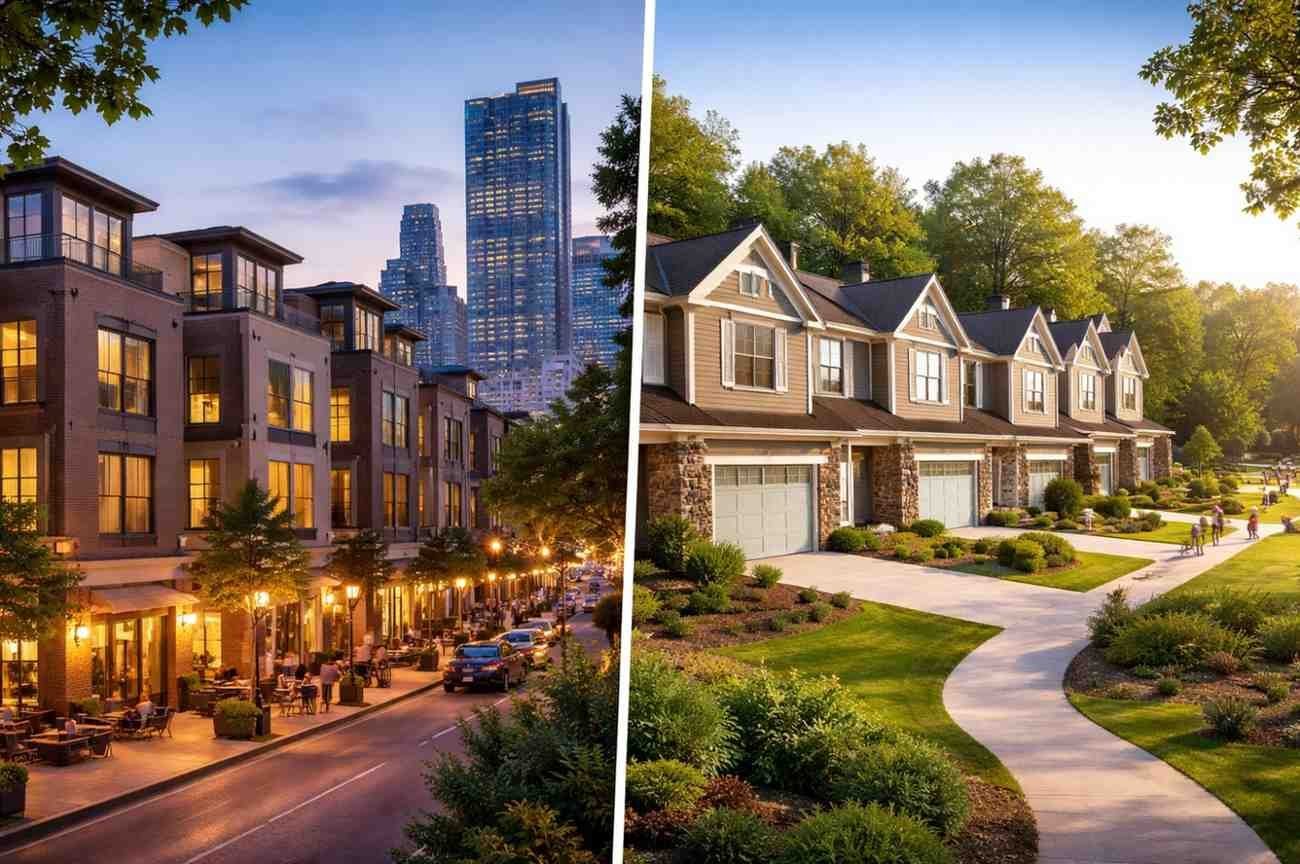
Choosing a townhome is more than a financial decision; it is a lifestyle commitment that dictates your daily routine. While townhomes offer a middle ground between condos and single-family houses, the experience varies significantly by location. As city centers revitalize with luxury vertical living and suburbs expand their amenities, many buyers are torn between the two.
The Pulse of the City: Urban Townhome Communities
Urban townhomes are designed for those who crave connectivity. Usually located in or near the city center, these properties place you in the middle of the action. The defining characteristic of the urban townhome is proximity.
Access and Walkability

The biggest draw for city dwellers is the ability to live a car-optional lifestyle. In an urban townhome community, your “backyard” is often the city itself. Grocery stores, diverse restaurants, art galleries, and entertainment venues are frequently within walking distance. For professionals working downtown, the commute might be a short walk or a quick subway ride, returning hours of time to your week that would otherwise be spent in traffic.
Vertical Living and Efficiency
Because land is at a premium in the city, urban townhomes tend to be built vertically. You might find properties that are three or four stories tall, sometimes with a rooftop terrace serving as the primary outdoor space. These homes maximize efficiency. While the overall square footage might be lower than a suburban counterpart, the design is often modern, sleek, and optimized for a fast-paced lifestyle.
The Culture Factor
Living urban means you are immersed in cultural diversity. You have immediate access to festivals, museums, and a constantly rotating selection of new businesses. For extroverts and those who feed off the energy of a crowd, the urban environment provides endless stimulation.
Breathing Room: Suburban Townhome Communities
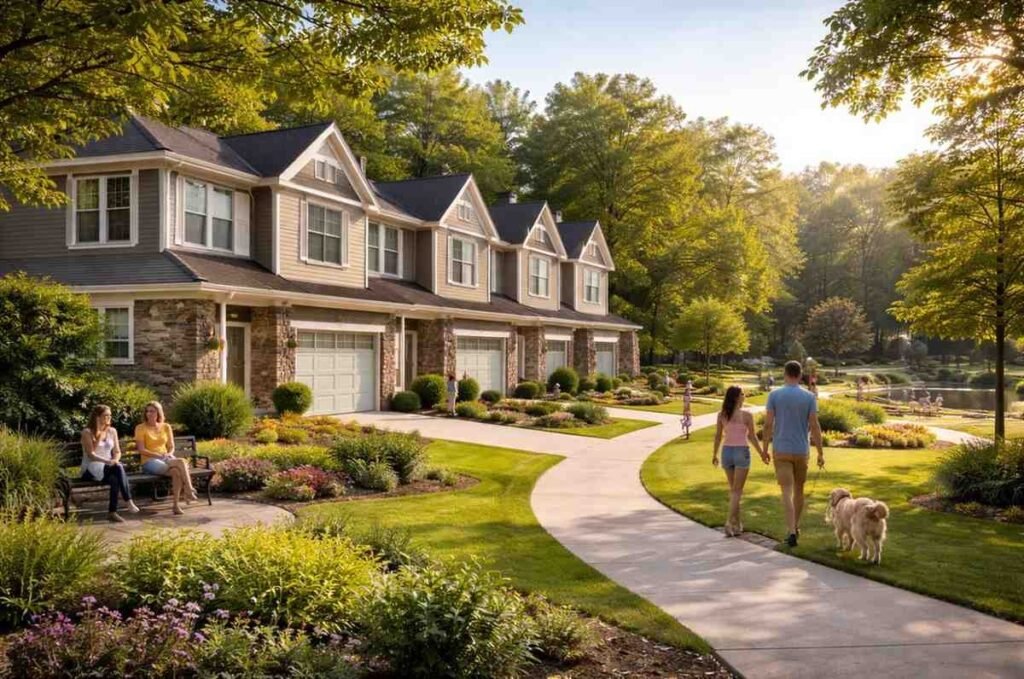
On the other side of the spectrum, suburban townhome communities offer a sanctuary away from the noise. These developments are often sprawling, featuring wider streets, more greenery, and a slower pace of life.
Space and Value
The most immediate difference buyers notice is the price-per-square-foot ratio. In the suburbs, your money typically goes further. You are more likely to find wider floor plans, larger kitchens, and private patios or small yards. For families or those who work from home and need a dedicated office, this extra space is often the deciding factor.
For example, buyers looking at new construction townhomes in Salem, UT often find they get significantly more square footage and access to outdoor recreation compared to similar price points in dense metropolitan centers.
Community Atmosphere
Suburban developments are frequently master-planned with a specific sense of community in mind. It is common to find amenities like swimming pools, clubhouses, tennis courts, and playgrounds built directly into the HOA (Homeowners Association) package. The vibe tends to be neighborly, with lower turnover rates than city rentals, allowing for deeper connections with those living next door.
Quiet Surroundings
If you value silence after 9:00 PM, the suburbs are generally the safer bet. Removed from the sirens, traffic, and nightlife of the city, these communities offer a level of tranquility that is hard to replicate downtown.
Lifestyle Considerations: How Do You Spend Your Day?

When choosing between these two options, it helps to visualize your average Tuesday and your ideal Saturday. The logistics of your daily routine should weigh heavily on your decision.
The Commute
This is often the biggest pain point for suburban buyers. If your job is in the city, you must calculate the cost of commuting—not just in gas and vehicle wear and tear, but in time and stress. However, with the rise of remote work, this is becoming less of a hurdle. If you only go into the office twice a week, a forty-minute drive from the suburbs might be a worthy trade-off for a larger home.
Social Life and Entertainment
Urban living facilitates spontaneous socialization. You can decide to go out for dinner at 7:00 PM and be seated at a top-tier restaurant by 7:15 PM. Suburban socialization often requires more planning. It might look like hosting a barbecue in your backyard or meeting neighbors at the community pool. If your social life revolves around nightlife and clubs, the suburbs might feel isolating. If it revolves around hiking, biking, or dinner parties, the suburbs may actually facilitate your hobbies better.
Access to Nature
Urban areas offer manicured parks and public gardens, but they can get crowded. Suburban communities often border genuine nature preserves, walking trails, or lakes. If you have a dog that needs to run or you enjoy weekend cycling without dodging taxis, the suburban infrastructure is usually more accommodating.
Real Estate Trends to Watch
The line between “urban” and “suburban” is beginning to blur, creating interesting trends in the real estate market.
The Rise of “Surban” Living
Developers are increasingly building “surban” neighborhoods—suburban areas that feature urban-style amenities. These are townhome communities in the suburbs that are walking distance to a “Main Street” style shopping district. This trend suggests that buyers want the space of the suburbs with the walkability of the city.
Investment Potential
Historically, urban real estate appreciates faster due to scarcity. However, as millennials form families and Gen Z enters the market, demand for suburban townhomes has skyrocketed. The flexibility of remote work has leveled the playing field, making suburban townhomes a robust investment class, particularly in emerging markets with good school districts and low crime rates.
Conclusion
Choosing between an urban and suburban townhome depends on your life stage. Urban townhomes are ideal for career-focused individuals seeking cultural stimulation and convenience, while suburban townhomes offer more space and a quiet retreat in exchange for a longer commute. Spend time in each environment to determine which feels right for you.