




I’ve sat in boardroom discussions where climate change used to come up once a year, usually under “long-term strategy” or corporate responsibility. That’s no longer the case. Today, it shows up in risk management meetings, investor calls, insurance renewals, and supply chain reviews. It’s no longer theoretical. It’s operational.
What changed isn’t just the weather. It’s how deeply climate events now affect profitability, compliance, labor, and access to capital. The business risks associated with climate change have shifted from distant projections to present-day cost centers. And companies that treat them as abstract environmental concerns often learn the hard way that they’re financial risks first.
The Two Core Categories of Climate Risk
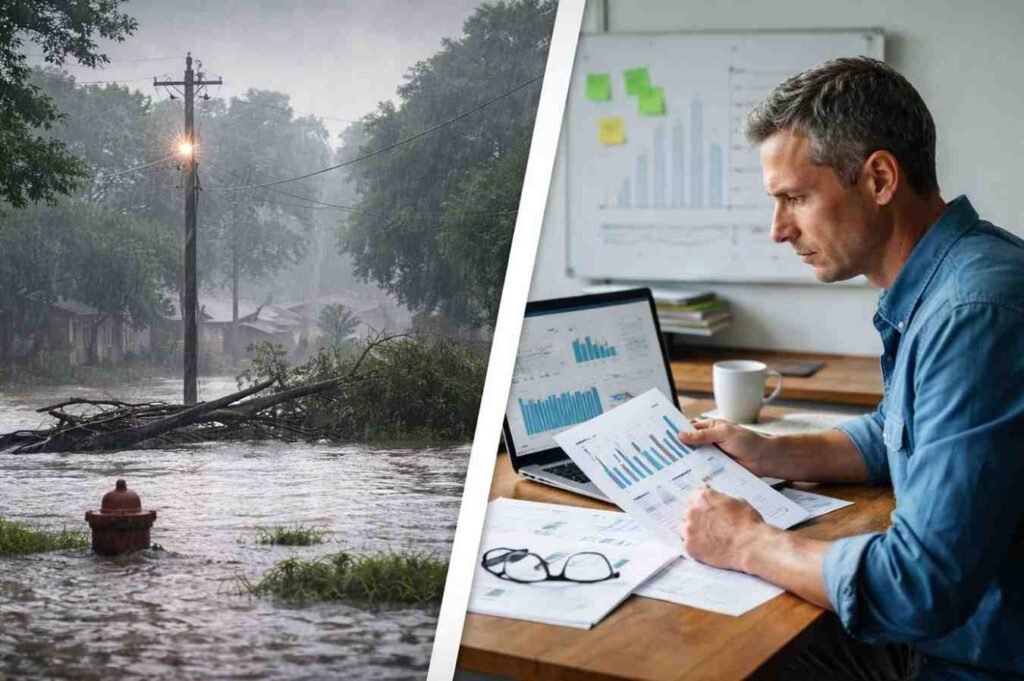
Most analysts break climate change impact on business into two primary buckets: physical risks and transition risks. Together, they reshape how companies plan, insure, invest, and grow.
Physical Climate Risks: When Operations Take the Hit
Physical climate risk business exposure refers to direct damage and operational disruption caused by environmental changes and extreme weather events.
Hurricanes shut down ports. Wildfires disrupt logistics corridors. Flooding damages distribution hubs. Heatwaves reduce labor productivity. These aren’t rare anomalies anymore, they’re recurring stress points.
Asset Damage and Operational Disruption
Companies with physical infrastructure, manufacturing plants, warehouses, and retail locations face rising exposure to asset damage. Coastal and flood-prone properties increasingly face routine flooding risk under higher sea-level projections. Even inland regions experience flash flooding and wildfire exposure that didn’t historically exist at scale.
Operational downtime isn’t just about rebuilding. It affects:
- Contractual delivery timelines
- Customer relationships
- Revenue recognition
- Working capital cycles
And the ripple effects move fast across supply chain disruption networks.
Supply Chain Complications
Even businesses far from climate-prone zones feel the impact. If a supplier’s facility shuts down due to a hurricane, downstream manufacturers absorb the delay. If a drought limits agricultural output, food producers face input shortages and price spikes.
Modern supply chains operate lean. That efficiency leaves little room for climate volatility.
Labor and Productivity Strain
Rising temperatures reduce output, especially in construction, agriculture, and logistics. Heat stress increases health incidents. Indoor facilities must spend more on cooling infrastructure. Workforce productivity loss becomes a measurable financial risk.
Insurance Hardening
One of the clearest signals that the financial risks of climate change are real comes from the insurance market. Premiums have surged in high-risk regions. Some carriers have reduced coverage or exited certain markets entirely. When insurance becomes unaffordable or unavailable, business continuity planning changes overnight.
Transition Risks: The Cost of Economic Shift

Transition risk refers to financial and strategic risks that arise as markets move toward lower-carbon models.
These risks don’t destroy buildings. They reshape balance sheets.
Regulatory and Compliance Complexity
Companies now navigate a patchwork of climate-related disclosure laws at the state level, alongside global reporting frameworks. Large firms must track emissions data, supply chain impacts, and climate risk exposure in greater detail than ever before.
Compliance costs include:
- Data collection systems
- Legal reviews
- Sustainability reporting infrastructure
- External audits
Climate risk management in business now requires cross-functional coordination between legal, finance, and operations teams.
Stranded Assets
High-carbon infrastructure faces the possibility of becoming economically obsolete before its useful life ends. Fossil fuel reserves, coal-fired plants, and outdated industrial facilities risk losing long-term viability.
Stranded assets don’t just reduce asset value; they distort long-term capital allocation planning.
Market and Technology Shifts
Consumer preferences shift faster than many executives expect. Demand for electric vehicles continues to grow. Energy-efficient appliances command premium pricing. Investors increasingly screen portfolios for climate transition risk.
Companies that fail to adapt face declining demand and shrinking margins.
Reputational and Litigation Risk
Stakeholders now scrutinize environmental claims closely. Allegations of greenwashing have led to lawsuits and regulatory scrutiny. Investors and customers expect measurable progress, not marketing language.
Reputational risk compounds financial exposure.
Financial and Economic Impact

The business risks associated with climate change ultimately translate into financial outcomes.
Economic projections estimate that climate change could reduce long-term GDP growth by several percentage points under central scenarios. That macroeconomic slowdown affects consumer spending, credit markets, and capital investment.
At the firm level, research increasingly shows that high climate transition risk correlates with lower market valuation and profitability, especially in heavy industry sectors.
Investors now use climate risk metrics to inform asset allocation. Firms perceived as unprepared may face:
- Higher cost of capital
- Reduced institutional investment
- Increased shareholder activism
Climate risk now directly influences enterprise value.
Why These Risks Feel Different Now
A decade ago, climate change appeared primarily in sustainability reports. Today, it influences insurance underwriting, loan pricing, procurement contracts, and investor disclosures.
Three structural shifts explain this change:
- Climate events are increasing in frequency and cost.
- Regulatory oversight is expanding.
- Capital markets are pricing climate resilience into valuations.
This combination transforms climate change impact on business from a reputational issue into a balance-sheet issue.
What Smart Companies Are Doing
Forward-looking organizations are embedding climate risk management in business strategy rather than isolating it in sustainability teams.
They are:
- Mapping physical climate risk across supply chains
- Stress-testing financial models under transition scenarios
- Diversifying geographic exposure
- Investing in resilient infrastructure
- Improving disclosure transparency
They treat climate risk as enterprise risk, not environmental policy.
Frequently Asked Questions (FAQs)
1. What are the main business risks associated with climate change?
They fall into two categories: physical risks (asset damage, supply chain disruption, labor productivity loss, insurance constraints) and transition risks (regulatory compliance, stranded assets, market shifts, reputational exposure).
2. How does climate change affect company profitability?
Climate-related disruptions increase operational costs, reduce productivity, elevate insurance premiums, and can lower market valuation if investors perceive high transition risk.
3. What is climate transition risk in business?
Climate transition risk refers to financial and strategic risks arising from regulatory changes, evolving consumer preferences, technological shifts, and carbon reduction mandates.
4. How can businesses manage climate risk effectively?
Companies can assess physical exposure, diversify supply chains, integrate climate scenario analysis into financial planning, improve disclosure practices, and invest in resilient infrastructure.
Final Thoughts
The real business risks associated with climate change aren’t about distant forecasts; they’re about operational resilience and capital discipline today. Physical disruptions strain infrastructure. Transition pressures reshape markets. Financial systems now respond to both. Leaders who treat climate risk as a compliance checkbox miss the broader reality: climate exposure is now embedded in valuation, insurance pricing, workforce productivity, and supply chain stability.
The companies that adapt early don’t just reduce risk. They build a structural advantage.