

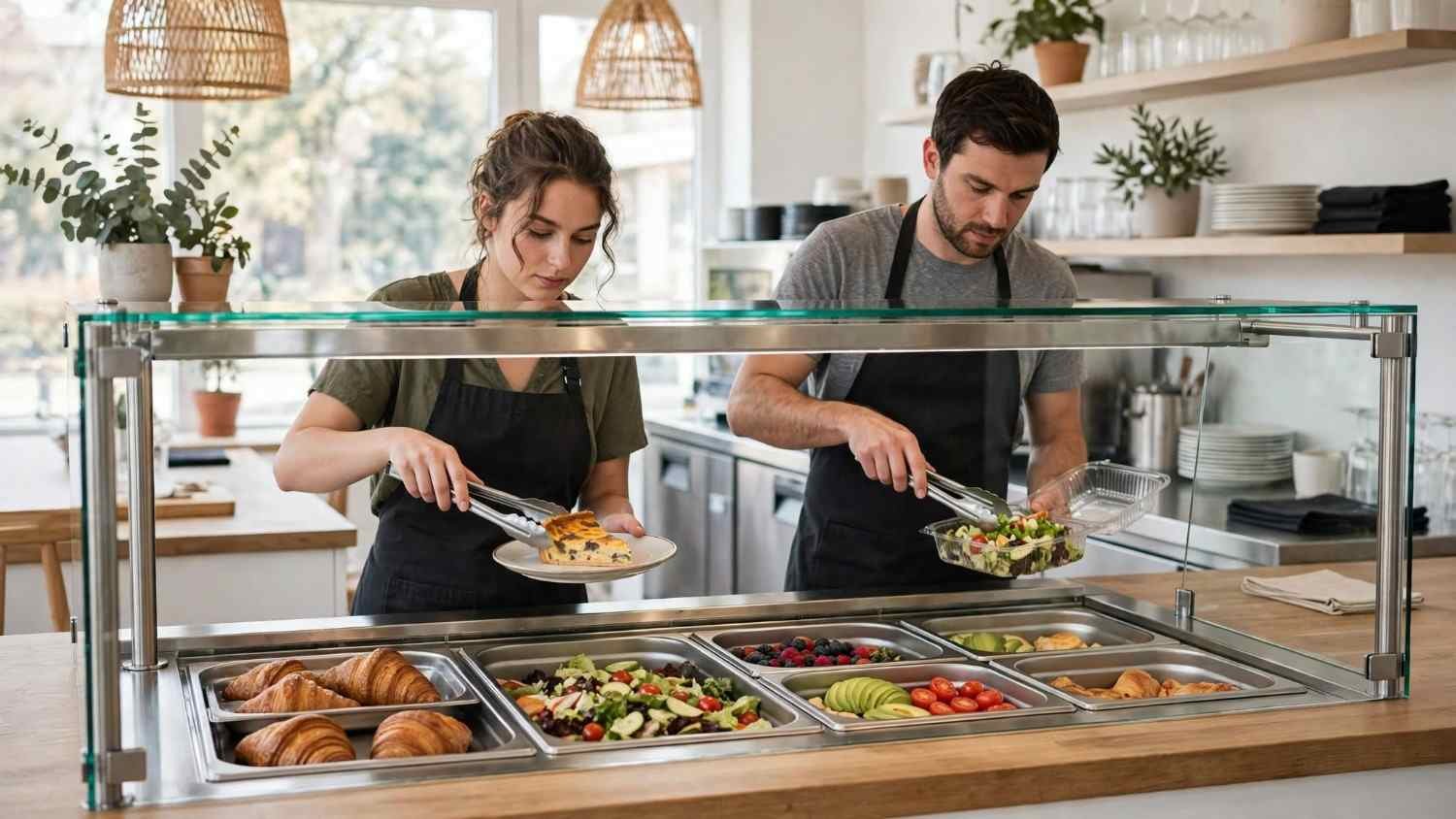
A food guard needs to protect the display while remaining easy for staff to clean and inspect. Tight corners, awkward gaps, and poorly positioned supports can make routine care harder. Considering access and cleaning during design helps the barrier fit the way the food service area operates.
That is where design choices matter. The difference between a guard that works well for one season and one that performs for years usually comes down to fit, access, materials, and how thoughtfully it was installed. Sawyer Glass approaches these details as part of the job, not as an afterthought, which is why cleanability and inspection should be treated as core requirements rather than optional conveniences.
Why Cleanability Is a Design Problem, Not a Cleaning Problem
The easiest barriers to maintain are the ones that are simple from day one. If a guard is oversized, loosely fitted, or placed in a way that traps dust and food residue, staff will spend extra time working around seams, edges, and awkward gaps. That slows down routine cleaning and makes consistent sanitation harder to sustain during busy shifts.
A good installation reduces friction. Smooth glass surfaces are easy to visually check, and when the layout is custom-fitted, there are fewer places for grime to collect. The goal is not just to make wiping easier. The goal is to create a setup that encourages consistent daily cleaning because it does not feel like a chore.
With glass sneeze guards in Salt Lake County, businesses are usually looking for more than a barrier. They need something durable enough for repeated cleaning, clear enough to preserve visibility, and practical enough that staff can maintain it without disrupting the workday.
The details that make cleaning easier
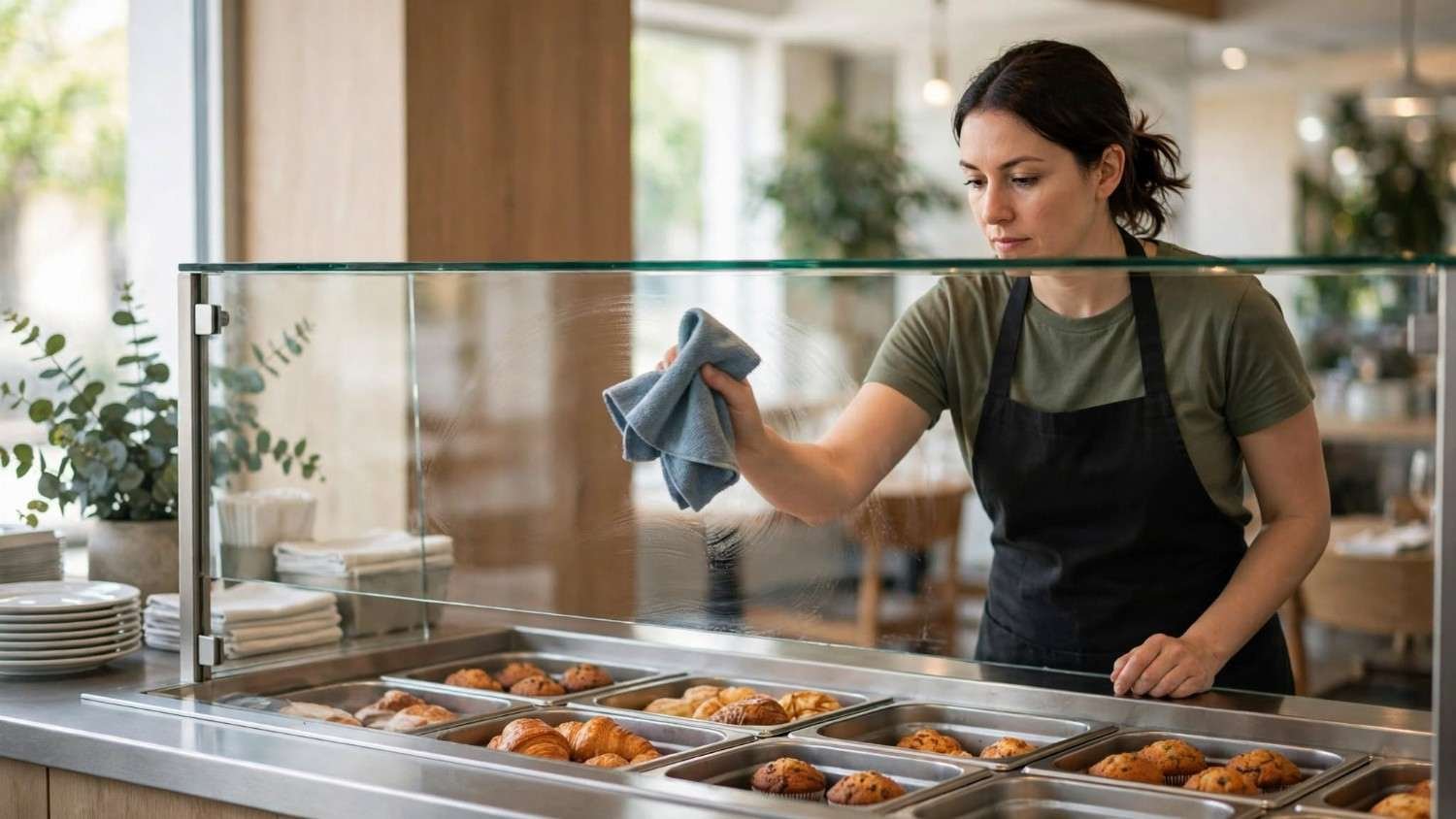
A well-planned guard typically supports cleaning in several ways:
- Fewer seams and joints where residue can gather
- Smooth, nonporous surfaces that wipe clean quickly
- Custom sizing that limits awkward reach-around cleaning
- Clear edges and pass-through areas that are easy to inspect
- Placement that leaves enough room for staff to clean both sides
Those details sound simple, but they change the daily experience of maintaining the station. A custom fit from Sawyer Glass can reduce the need for makeshift adjustments that create more cleanup later.
Inspection Matters Because Small Problems Become Operational Problems
Inspection is often treated as a visual check, but in practice it is a maintenance discipline. Staff should be able to see whether a guard is stable, clean, properly aligned, and free from cracks, chips, or loose hardware. When that is difficult, small issues can linger until they interfere with service or require more expensive correction.
A transparent barrier helps because it makes issues visible. Unlike opaque partitions, glass allows managers and staff to inspect both the barrier itself and the activity behind it without losing line of sight. That matters in food service settings where supervision, communication, and customer interaction all happen at the same counter.
Sawyer Glass designs installations with that visibility in mind. The point is not simply to protect a service area. It is to make the barrier easy to live with in a real operating environment where people are moving quickly and maintenance windows are short.
What to look for during routine inspection
A practical inspection process should focus on a few basics:
- Surface clarity and visible residue
- Chips, cracks, or edge damage
- Hardware stability and secure mounting
- Proper alignment with the counter
- Condition of any pass-through opening
- Evidence of wear near high-touch areas
These checks do not need to be complicated. In fact, the best systems are the ones that can be assessed in a few seconds during opening, closing, or a mid-shift reset. When the barrier is well made and correctly installed, inspection becomes part of the routine instead of a special project.
Tempered Glass Changes the Maintenance Equation
Material choice has a direct impact on how long a guard looks good and how much effort it takes to keep it that way. Tempered glass is often the more practical choice for high-traffic commercial settings because it is more scratch-resistant and durable than plexiglass. That matters in food service, where repeated wiping, contact, and daily use can wear down softer materials quickly.
Plexiglass can offer higher impact resistance in some situations, but it is more prone to scratching. Once a surface becomes marred, it is harder to inspect clearly and easier for the guard to look worn even when it is still functional. That visual decline can create the impression of poor upkeep, even if staff are cleaning regularly.
Tempered glass preserves clarity longer. That makes it easier to evaluate cleanliness, easier to see behind the barrier, and more consistent in customer-facing spaces. For operators who want a cleaner long-term appearance, Sawyer Glass usually treats this as a durability decision first and a visual one second.
Fit and Access Determine Whether the Barrier Helps or Hinders Workflow
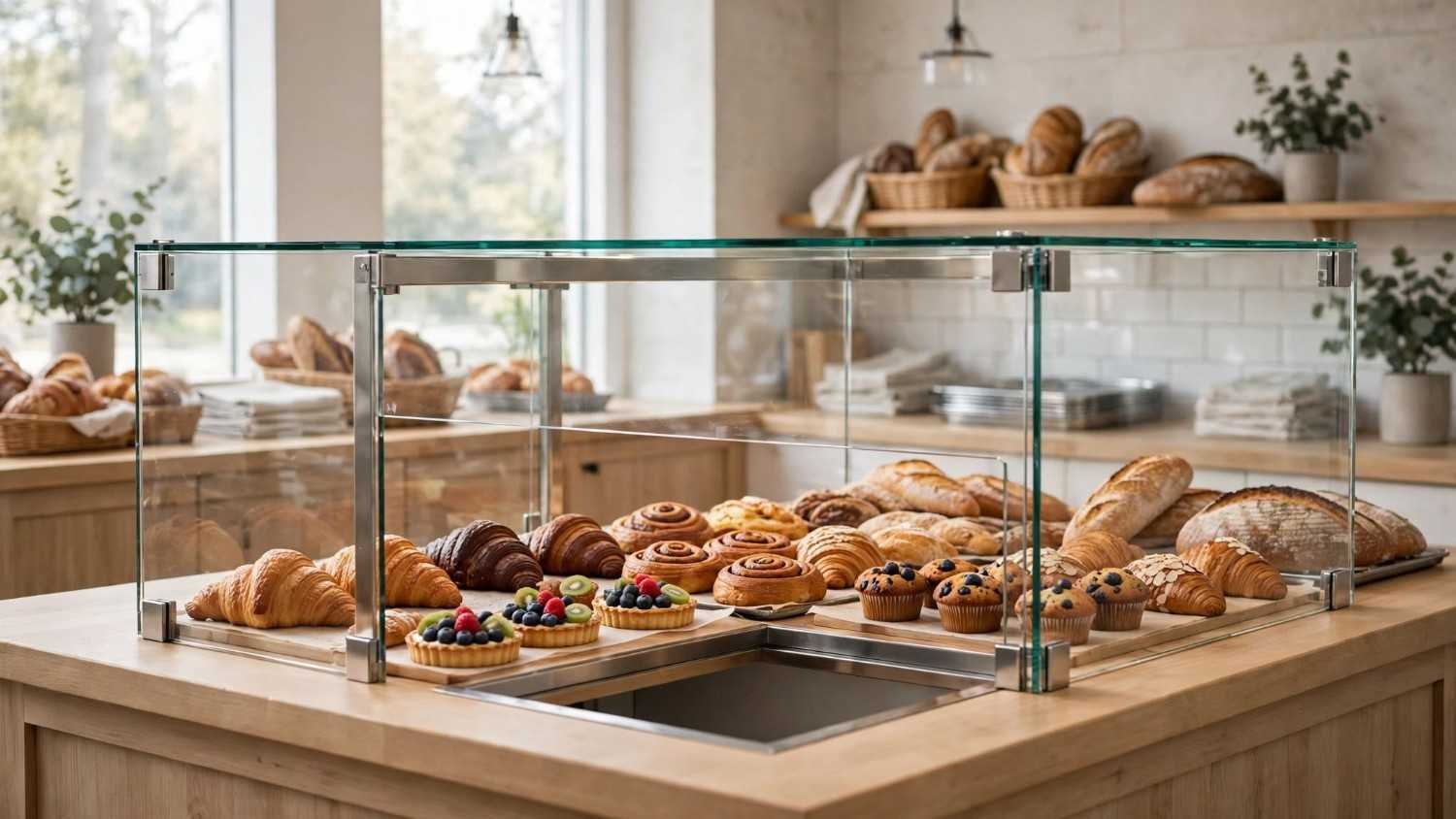
A guard that interferes with service is almost always a design issue. Food counters need enough protection to serve their purpose, but they also need access for transactions, item exchange, and daily movement. That is why custom sizing and pass-through planning are so important.
In food protection applications, installations should generally be mounted at least 14 inches above the food counter and extend seven inches beyond the food. Guards also commonly range from 12 inches to 48 inches in height, depending on the setting and the people interacting across the counter. Those dimensions are not just technical notes. They shape how well the barrier supports both protection and usability.
If the opening is too small, staff will work around it. If it is too large or poorly positioned, the barrier loses effectiveness. If the guard extends too far into the work area, cleaning becomes more difficult and service slows down. Sawyer Glass focuses on getting those proportions right so the final installation feels intentional, not improvised.
When a custom layout is the better choice
A custom layout is usually worth it when any of the following are true:
- The counter has unusual dimensions
- Items need to be handed through regularly
- Staff need clear sightlines across the station
- The area must be cleaned multiple times a day
- The guard has to fit around existing equipment or fixtures
That is especially relevant in food service spaces where one size rarely fits every counter. A tailored installation can make the difference between a barrier that feels intrusive and one that quietly supports the operation.
How Strong Operators Keep Guards Looking Professional Over Time
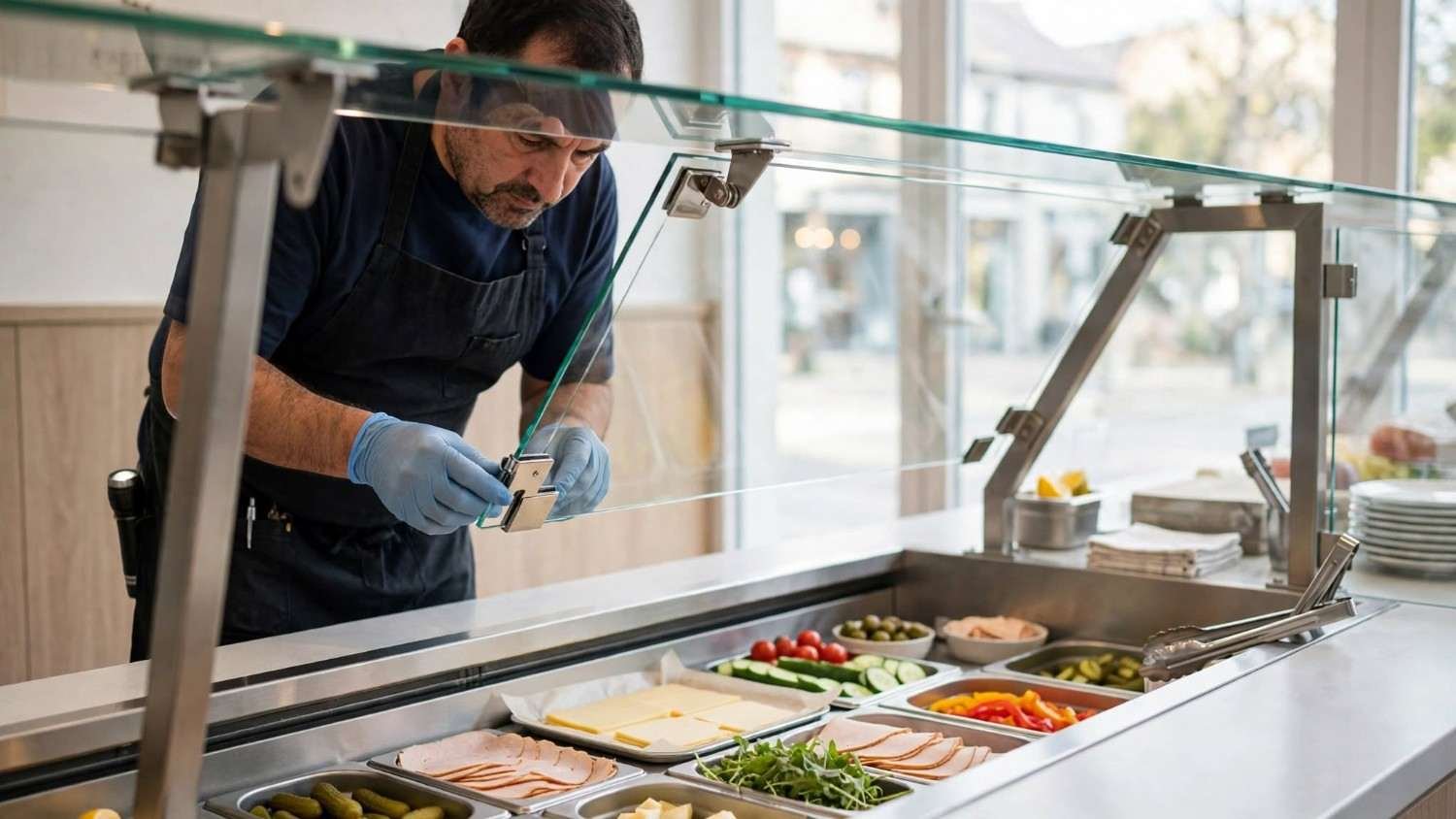
The most effective operators do not rely on major overhauls. They build maintenance into the routine. That means choosing a material that resists wear, placing the barrier where it can be reached, and setting expectations for daily review. It also means selecting a contractor that understands how a guard will actually be used, not just how it will look on installation day.
Sawyer Glass provides custom commercial glass solutions that can be planned around the work area. In a food service environment, that matters as much as appearance. A polished installation is useful only if it stays clean, stable, and easy to assess under real conditions.
The long-term value comes from reducing preventable problems. Better fit means less buildup. Better visibility means faster inspection. Better material choice means the guard stays presentable longer. Those gains may seem small individually, but together they reduce friction across the entire operation.
A Barrier Is Only as Good as Its Maintenance Logic
The main lesson is straightforward: a food service glass guard should not be judged only by how it looks when new. It should be judged by how quickly it can be cleaned, how clearly it can be inspected, and how well it fits the pace of the space around it. Whether a business serves traditional dishes, specialty beverages, or cbd recipes, maintaining clean and properly installed glass guards is essential for food safety and hygiene. When those three things work together, the barrier becomes a genuine operational advantage.
That is the standard Sawyer Glass builds toward. For businesses evaluating food service protection, the smartest next step is to choose an installation plan that supports daily use, not one that creates extra work. If you are considering a new guard or replacing an older setup, Sawyer Glass can help you plan a solution that is easier to maintain from the start.