



Transforming your outdoor space into a breathtaking retreat requires more than just mowing the lawn and planting a few petunias. Thoughtful landscaping not only enhances your home’s curb appeal but also creates a functional environment where you can relax, entertain, and connect with nature.
Research consistently shows that well-designed outdoor spaces can significantly increase property value while promoting better mental well-being for homeowners. If you are looking to revitalize your property, these nine landscaping ideas will provide you with the inspiration and practical steps needed to completely elevate your yard.
1. Plant a Native Garden
One of the most sustainable and visually rewarding landscaping choices you can make is incorporating native plants into your yard. Because these species are naturally adapted to your local climate and soil conditions, they require significantly less water, fertilizer, and maintenance than exotic varieties. According to the Environmental Protection Agency, native plants can reduce outdoor water usage by up to 50%. A practical tip for getting started is to visit a local nursery to identify native shrubs, flowers, and grasses that thrive in your specific hardiness zone. Grouping them by their sun and water needs will ensure a resilient, vibrant garden year-round.
2. Design a Multi-Seasonal Flower Bed
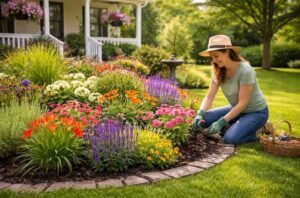
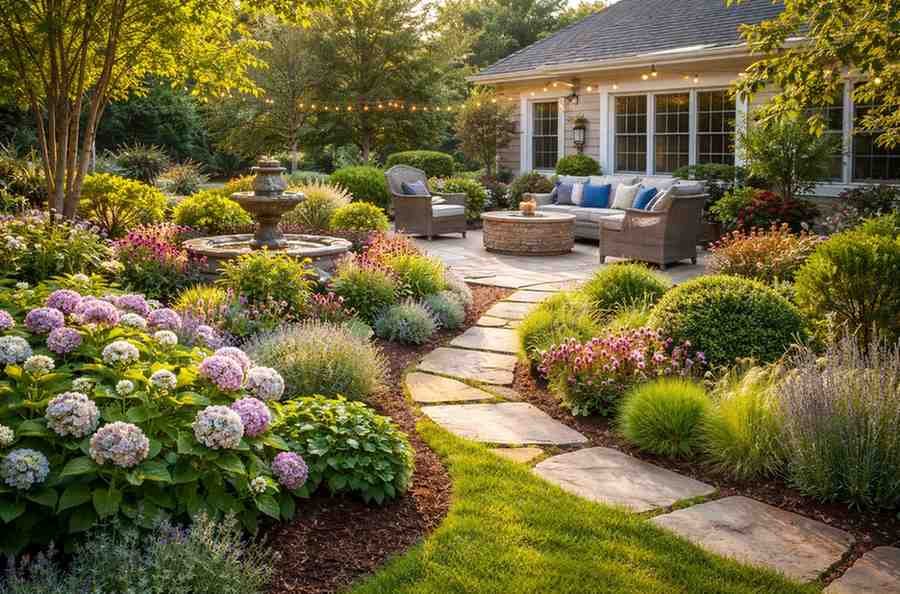
A truly elevated yard maintains its visual appeal throughout the entire year, rather than just peaking in the spring or summer. To achieve this, design your flower beds with a mix of perennials, annuals, and evergreens that offer staggered blooming times. For example, you might plant tulips for spring color, coneflowers for summer vibrancy, and asters for autumn warmth. Incorporating evergreen shrubs provides a structural backdrop that keeps the yard looking alive even in the depths of winter. The key is to map out your plant choices on paper beforehand, elevate everything, and ensure there is always something visually interesting happening in the garden, regardless of the season.
3. Install Strategic Outdoor Lighting
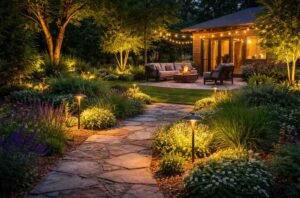
Outdoor lighting extends the usability of your yard well into the evening while simultaneously adding a layer of safety and security. Instead of relying solely on a harsh porch light, consider a layered lighting approach. Use soft pathway lights to guide foot traffic, spotlights to highlight architectural features or majestic trees, and string lights to create a warm canopy over a seating area. Solar-powered LED lights are an excellent, energy-efficient option that can be easily installed without the need for complex wiring. Proper illumination adds immediate ambiance and sophistication to any outdoor environment.
4. Incorporate Soothing Water Features

Introducing a water feature can dramatically shift the atmosphere of your yard, turning a basic lawn into a tranquil oasis. The sound of trickling water naturally masks neighborhood noise and creates a calming focal point. You do not necessarily need a massive, expensive pond to achieve this effect. A simple, self-contained bubbling urn, a wall-mounted fountain, or a small birdbath can attract local wildlife and add dynamic movement to your landscaping. When installing a water feature, place it near a patio or seating area where the auditory and visual benefits can be fully appreciated.
5. Build an Inviting Fire Pit Area
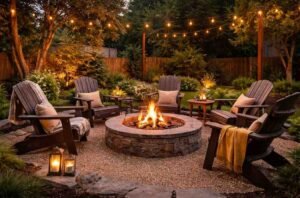
A fire pit serves as a natural gathering space that draws family and friends together, making your yard a prime location for socializing. Whether you opt for a sleek, modern gas fire pit or a rustic, wood-burning stone circle, this feature anchors the outdoor space. To elevate the design, surround the fire pit with comfortable, weather-resistant seating and ground the area with a distinct material, such as crushed gravel or flagstone. Ensure you place the fire pit at a safe distance from overhanging trees and wooden structures to maintain a secure environment.
6. Create Textured Hardscapes
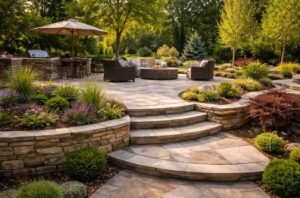
Hardscaping refers to the non-living elements of your yard, such as walkways, patios, and retaining walls. Integrating high-quality materials into these structures provides the necessary contrast to the soft greenery of your lawn and garden beds. For a durable and aesthetically pleasing upgrade, consider using precast stone in Portland to build out your retaining walls or patio borders. This material mimics the natural beauty of authentic stone while offering structural longevity. By blending different textures—like smooth pebbles next to rugged stone blocks—you create a rich, multi-dimensional landscape design.
7. Add Vertical Gardening Elements
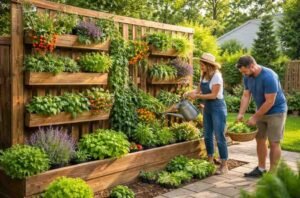
If you are working with a smaller yard or simply want to maximize your green space, vertical gardening is a highly effective strategy. Drawing the eye upward creates the illusion of a larger area while concealing unsightly fences or blank exterior walls. You can achieve this by installing wooden trellises for climbing vines like clematis or jasmine, hanging tiered planters from sturdy pergolas, or mounting a living wall system. Vertical elements not only add lushness to the perimeter of your yard but also improve air circulation around your plants, reducing the risk of disease.
8. Designate Functional Outdoor Living Zones
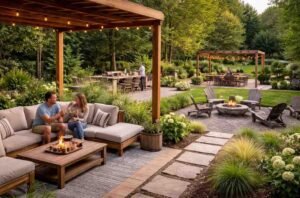
Treat your yard as an extension of your home’s interior by breaking it up into distinct, functional zones. You might designate one corner for outdoor dining, complete with a sturdy table and overhead shade, while dedicating another area specifically for lounging or reading. Define these zones using subtle visual cues like outdoor rugs, low hedges, or changes in paving materials. This organizational strategy prevents the yard from feeling like one massive, overwhelming expanse of grass and turns it into a purposeful, multi-use living area.
9. Upgrade Your Lawn Alternative
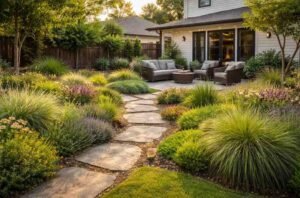
Traditional grass lawns require immense amounts of water, mowing, and chemical treatments to stay pristine. To elevate your yard’s sustainability and uniqueness, consider replacing parts of your lawn with low-maintenance alternatives. Micro-clover, for instance, stays green longer, requires less mowing, and naturally adds nitrogen back into the soil. Alternatively, expanding your mulch beds or using creeping groundcovers like thyme or Corsican mint can reduce your lawn care burden while adding beautiful textures and scents to the landscape.
Thoughtful landscaping is an ongoing process of balancing natural beauty with structural functionality. By implementing a mix of sustainable planting, purposeful hardscaping, and strategic lighting, any outdoor space can be transformed into a highly elevated, tranquil environment.