

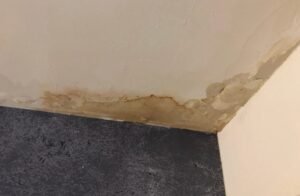


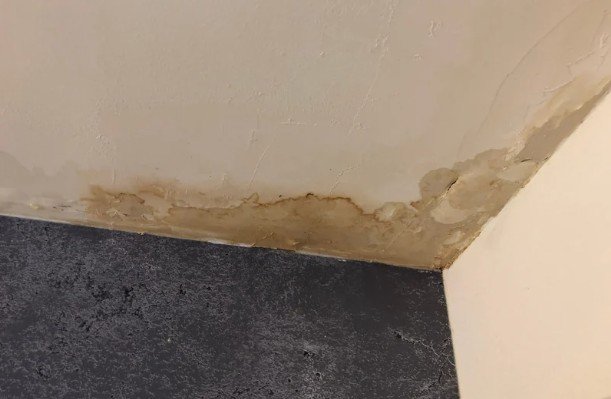
A ceiling stain that returns after drying suggests the moisture problem still needs attention. The visible mark may be some distance from the point where water entered. Tracing the cause before repairing the ceiling helps avoid covering damage that will simply appear again.
That is why recurring stains deserve more attention than a one-time drip. They often point to a roof problem that is active, hidden, and capable of doing more damage than the visible mark suggests. Riverbend approaches these situations with a straightforward premise: do not guess, assess. The stain is the symptom, not the diagnosis.
Why Recurring Stains Usually Point Back to the Roof
A stain that reappears after drying means water is finding a repeatable route. That route may be subtle. It does not have to produce a dramatic leak or obvious interior dripping to be serious. In many homes, the moisture travels from the roof system into insulation, around framing, and finally to the ceiling surface where it becomes visible.
The most important point is that the visible stain is often far from the actual entry point. Water can move along roof decking, around fasteners, or through concealed seams before it reaches the interior. That is why homeowners who only patch the ceiling often find themselves dealing with the same problem again later.
Recurring stains commonly relate to conditions such as:
- Damaged or aging flashing around chimneys, skylights, vents, or wall intersections
- Missing, lifted, or wind-damaged shingles
- Nail pops or exposed fasteners
- Underlayment deterioration
- Ice damming at the eaves
- Poor attic ventilation that allows condensation to accumulate
Each of these problems can allow undetected water infiltration without a dramatic failure on the roof surface. Riverbend often sees that the stain is only the last sign of a longer chain of moisture movement.
The Difference Between a One-Time Leak and an Ongoing Roof Issue
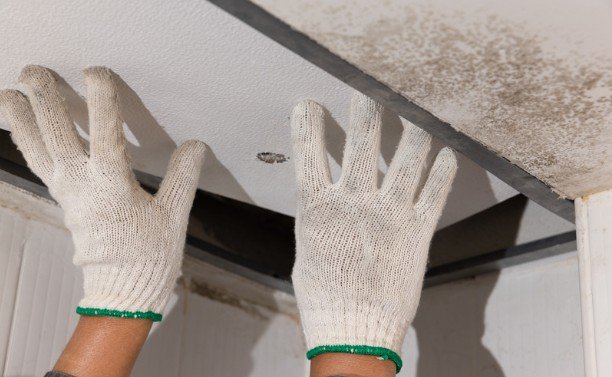
A single stain after an unusual storm may come from a temporary condition. An ongoing pattern is different. If the stain grows, returns in the same season, or appears after snowmelt and wind events, the roof system deserves a closer look. That pattern usually suggests the original source is still present.
Seasonal repetition is a clue, not a coincidence
If stains appear after winter thaw, ice dams become a strong possibility. When they show up after heavy wind, loose shingles or flashing damage may be involved. If they return during multiple weather cycles, the issue may be structural rather than incidental. That is especially true in climates that see freeze-thaw swings, snow load, and strong gusts.
This is where local knowledge matters. When assessing roofing in Layton, a stain is not interpreted in isolation. It is read against the weather, the roof slope, the age of the materials, the attic conditions, and the roof penetrations that are most vulnerable to moisture entry.
Location of the stain matters
Where the stain appears can help narrow the source, even though it rarely identifies the exact failure point on its own. Stains near exterior walls may point toward flashing or ice damming. Stains around interior corners can suggest water moving along framing. Marks below a bathroom vent or skylight may indicate a roof penetration issue rather than a plumbing problem.
That distinction matters because a ceiling patch can hide the evidence while the leak continues. Riverbend’s value is in tracing the pattern back to the roof assembly, not just covering the mark inside the house.
The Roof Details That Most Often Get Missed
Many recurring stains come from small failures that are easy to overlook during casual inspection. The roof may look acceptable from the ground, but the vulnerable detail is often only visible up close. That is why a professional assessment is more useful than a quick visual guess.
Flashing is one of the most common problem areas. It protects joints where the roof meets another surface, and those transitions are naturally weak points. If the metal is corroded, displaced, or poorly sealed, water can enter during wind-driven rain or snowmelt.
Underlayment is another issue that gets less attention than shingles but matters just as much. Once water gets past the outer layer, the underlayment becomes the backup defense. If it is degraded, torn, or improperly installed, small moisture intrusions become recurring interior stains.
Attic ventilation also belongs in the conversation. Poor airflow can trap heat and moisture, which encourages condensation in cold weather. That moisture may show up as a ceiling stain even when the roof covering itself does not appear dramatically damaged. In that situation, the roof problem is not just exterior. It is a system issue.
What Strong Roof Diagnostics Focus On
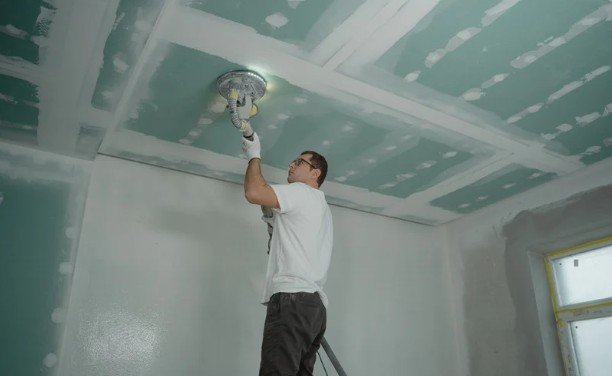
A good inspection does more than identify a likely leak area. It checks the whole chain of conditions that allow water to enter, travel, and appear indoors. That is where Riverbend takes a practical building-science approach. The goal is not to sell a bigger repair than needed. It is to determine what is actually failing.
A useful roof diagnosis usually examines:
- Shingles for lifting, loss, or wind damage
- Flashing around chimneys, skylights, vents, and walls
- Fasteners and nail pops
- Underlayment condition where accessible
- Signs of ice damming and freeze-thaw damage
- Attic ventilation and moisture patterns
- Gutter drainage and overflow behavior
This broader view matters because recurring stains rarely come from one isolated factor alone. A minor flashing defect can become worse if ventilation is poor. A small shingle issue can lead to infiltration if winter conditions push water into vulnerable seams. Riverbend focuses on these relationships because solving only the most visible defect may leave the actual source untouched.
Why Early Action Protects More Than the Ceiling
It is tempting to wait until a stain gets larger or a drip becomes undeniable. But by that point, the roof problem may already be affecting insulation, decking, or framing. Moisture that stays hidden can create conditions that are more expensive to correct than the visible repair itself.
The real risk is not the stain on the ceiling. It is what the stain suggests is happening above it. Repeated infiltration can shorten the useful life of surrounding materials, compromise thermal performance, and create a cycle where the home becomes harder to dry out each time moisture enters.
That is why a targeted repair is often the smartest first move. Not every stain means a replacement is necessary. In many cases, the better answer is a focused correction to flashing, shingles, drainage, or ventilation. Just as thoughtful irrigation design creates healthier and efficient landscapes by directing water where it belongs, effective roof repairs address the source of unwanted moisture. Riverbend’s process is designed to identify those smaller failures before they become larger structural problems.
For homeowners wanting a local starting point, Riverbend’s Layton service area page is a useful place to learn how the team approaches roof diagnosis and repair in this region.
The Practical Takeaway for Homeowners
Recurring ceiling stains are rarely random. They are usually the visible result of a roof system that is letting water in somewhere, even if the exterior damage is subtle. The challenge is not just finding the stain source inside the home. It is identifying the roof detail, weather condition, or ventilation issue that keeps allowing the problem to return.
That is why the best response is measured and specific. Look at the pattern, not just the mark. Consider the season, the roof penetrations, the attic, and the drainage. Then bring in a team that knows how to evaluate the full system rather than chase the symptom.
If you are seeing the same stain more than once, Riverbend can help determine whether the issue is flashing, shingles, ventilation, or ice damming, and recommend the right repair before the damage spreads further.